
Quick Answer
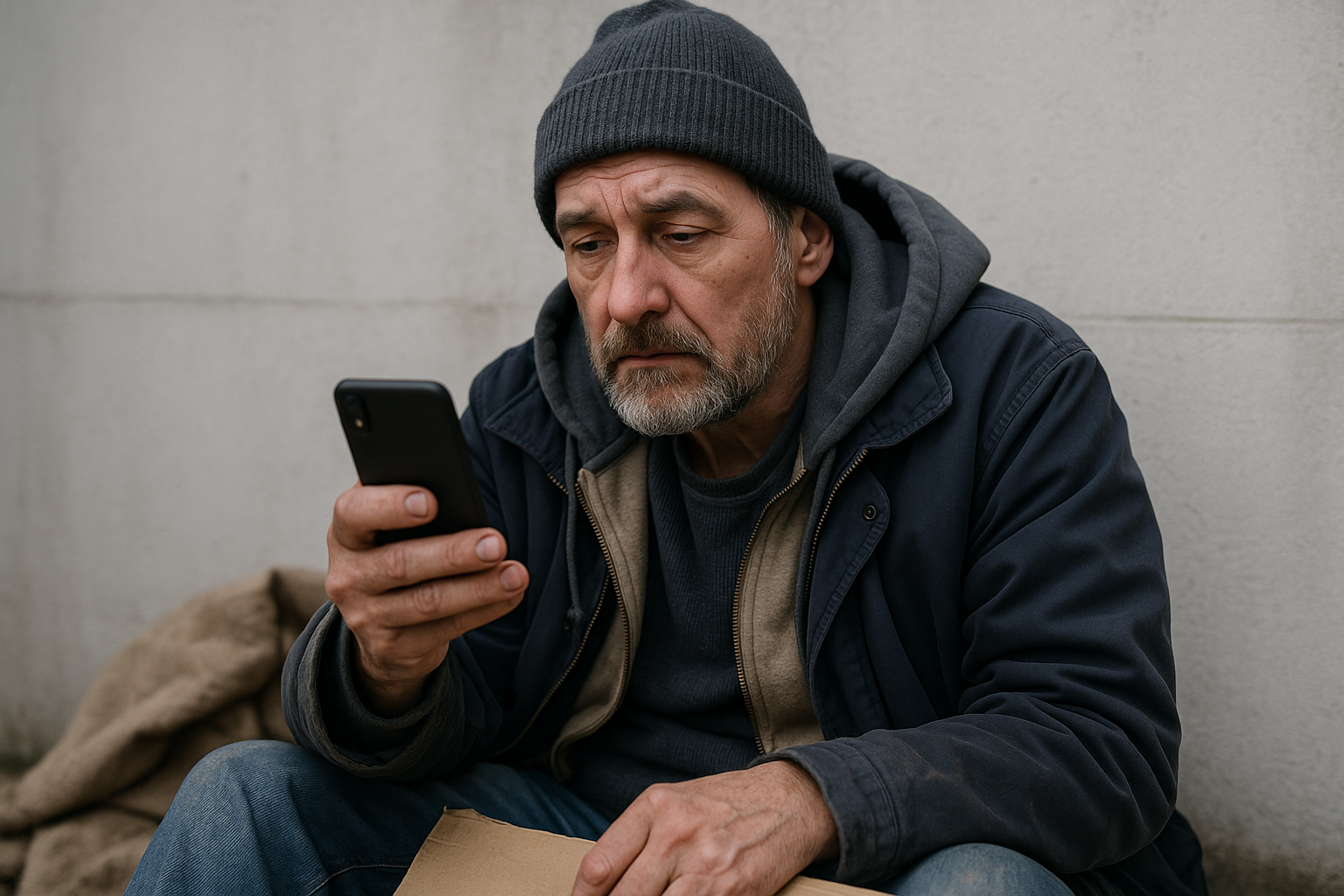
Yes. People experiencing homelessness can qualify for free or low-cost phone service through the federal Lifeline program, even without a permanent address. You can use a shelter address, a social service agency address, or USPS General Delivery, and you’ll need to confirm a temporary address every 90 days. Eligibility is based on low income or participation in specific benefit programs, and approved providers often supply a free smartphone with monthly minutes, texts, and data.
How Free Government Phones Work
“Free government phone” refers to a monthly discount from the federal Lifeline program, administered by the Universal Service Administrative Co. (USAC) and delivered through participating wireless carriers. The discount—up to $9.25 per month, or up to $34.25 on qualifying Tribal lands—helps cover phone or broadband service. Most wireless providers that participate in Lifeline bundle the discount into a $0 plan and include a free smartphone for new customers.
Many households previously combined Lifeline with the Affordable Connectivity Program (ACP) for extra data. ACP funding lapsed in 2024, and most ACP benefits ended in May 2024. Today, Lifeline is the primary federal option for low-income phone and broadband discounts. Some carriers offer their own low-income plans, but those are separate from Lifeline and may have different terms.
Who Qualifies for Lifeline (Including Those Without Housing)
You can qualify for Lifeline in one of two ways: by income or through participation in certain assistance programs. Applicants must be 18 or older (or an emancipated minor), and there is one Lifeline benefit per household. People living in shelters, transitional housing, or other group facilities can still qualify; they may need to complete a Household Worksheet to confirm they are separate economic households.
Income-Based Qualification
Your household income must be at or below 135% of the Federal Poverty Guidelines. “Household” means people who live together and share income and expenses. If you’re staying at a shelter or couch-surfing and do not share income and expenses with others at that location, you can be treated as your own household.
Program-Based Qualification
You’re eligible if you or someone in your household participates in any of the following:
- SNAP (Supplemental Nutrition Assistance Program)
- Medicaid
- Supplemental Security Income (SSI)
- Federal Public Housing Assistance (FPHA/Section 8)
- Veterans Pension or Survivors Benefit
Tribal-Specific Qualification
If you live on qualifying Tribal lands, you may receive a larger monthly discount. Eligibility can also include participation in:
- Bureau of Indian Affairs General Assistance
- Tribal TANF
- Food Distribution Program on Indian Reservations (FDPIR)
- Head Start (income-based) on Tribal lands
Address and Identity When You Don’t Have a Home
You do not need a permanent street address to get Lifeline, but you must provide a way to identify your location and receive mail. USAC and participating providers regularly serve applicants without housing; the process simply uses different address options and periodic confirmations.
Acceptable Address Options
You can generally use:
- A shelter or transitional housing address (ask staff for a letter on letterhead if possible)
- A social services agency address that agrees to receive mail for you
- USPS General Delivery (check with the local post office to set it up and confirm the correct formatting)
- A descriptive address if allowed by your provider (for example, a crossroads or landmark), plus a mailing address where you can pick up mail
If you provide a temporary address, Lifeline rules require you to confirm it every 90 days or your service could be suspended. This may be as simple as replying to a provider text or signing a confirmation form.
One-Per-Household Rule in Shelters
Lifeline is limited to one benefit per household. In group living settings like shelters, multiple eligible people can still receive Lifeline if they are separate economic households—meaning they do not share income and expenses. Providers will have you fill out a Household Worksheet to document this. Staff at many shelters are familiar with the form and can help.
Identity Verification Without a Driver’s License
To prevent fraud, the National Verifier (USAC’s eligibility system) must confirm your identity. If you don’t have a driver’s license, you can use alternatives such as:
- State-issued ID card
- Passport
- Tribal ID
- Birth certificate plus a supporting document (where accepted)
- Last 4 digits of your Social Security Number or your Tribal ID number
If identity can’t be verified automatically, you can upload or mail copies of documents. A participating provider or a community partner can help scan or fax them for you.
What Documents You May Need
USAC tries to verify eligibility through trusted databases. If it can’t, you’ll be asked for documents. What’s needed varies by person and state, but these categories cover most cases:
- Proof of program participation (award letter, benefits statement, or a screenshot from an official online portal)
- Proof of income if qualifying by income (prior-year tax return, three consecutive pay stubs, unemployment or Social Security benefit statement)
- Proof of identity (government-issued ID)
- Proof of address or a place you can receive mail (shelter letter, agency letter, or General Delivery confirmation)
- Household Worksheet if you live with others but don’t share income and expenses
- Emancipation documentation if you’re under 18 and applying as an emancipated minor
| Requirement | Examples That Usually Work | Tips If You’re Homeless |
|---|---|---|
| Program eligibility | SNAP or Medicaid approval/benefit letter dated within the last 12 months | Ask your caseworker for a printed letter or use a library to download a portal screenshot |
| Income eligibility | 1040 tax return, SSA or unemployment benefit letter, three recent pay stubs | If you have no pay stubs, use benefits letters or a statement from a shelter case manager |
| Identity | State ID, passport, Tribal ID | Many DMVs offer low-cost IDs; some shelters can help with fees |
| Address | Shelter letterhead address, agency letter, USPS General Delivery | Confirm your temporary address every 90 days to avoid suspension |
| Household rule | USAC Household Worksheet | Use it when multiple applicants are at the same shelter or group address |
How to Apply Step by Step
You can apply through the National Verifier or directly with a participating provider. Expect instant approval if your information matches databases; otherwise allow a few days for manual review. Mail-in applications typically take 1–3 weeks.
Option 1: Apply Online via the National Verifier
- Go to lifelinesupport.org and select “Apply Now.”
- Create an account with your name, date of birth, and the last four digits of your SSN or your Tribal ID number.
- Enter your address. If you use a shelter or General Delivery, enter that and be prepared to confirm it every 90 days.
- Select how you qualify (program or income) and upload documents if asked.
- Once approved, choose a participating Lifeline provider in your state to activate service.
Option 2: Apply by Mail
- Download and print the Lifeline application and Household Worksheet from lifelinesupport.org, or request them by calling the Lifeline Support Center at 800-234-9473.
- Include photocopies (not originals) of required documents.
- Mail to: Lifeline Support Center, PO Box 7081, London, KY 40742.
- Wait for an approval letter, then contact a provider to pick a plan and arrange delivery or pickup of your phone or SIM.
Option 3: Apply Through a Provider or Community Event
Many carriers and nonprofits hold sign-up events at shelters, food banks, or libraries. Staff can help you complete the National Verifier application on the spot, check documents, and activate your phone immediately if approved.
Choosing a Lifeline Provider
Most states have several options. Plans and device quality vary, so compare before you enroll. Look for strong coverage where you spend time, enough monthly data for your needs, and responsive customer support. Here are examples of well-known providers (availability differs by state):
- Assurance Wireless (T-Mobile network)
- SafeLink Wireless (Verizon network)
- Q Link Wireless (typically T-Mobile)
- Access Wireless (varies by state, often T-Mobile)
- TruConnect (T-Mobile network)
- Life Wireless, StandUp Wireless, enTouch Wireless (networks vary by region)
Typical benefits include unlimited texts, a large bucket of monthly minutes, and a data allowance sufficient for basic apps and email. Hotspot access and visual voicemail may be included but often have limits. International calling is rarely included. If you have a compatible phone, many providers let you bring your own device and will supply a free SIM. In some states, taxes or regulatory fees may apply even when the monthly plan price is $0.
What Service Looks Like After Approval
After you choose a provider, expect either an on-site activation (if you sign up in person) or a phone/SIM shipped to your mailing address. Activation is usually same day. Emergency calling (911) works on all devices. For better 911 location accuracy, give your provider the address of where you’re staying and update it if you move.
Keeping Your Benefit Active
- Use the service at least once every 30 days. If there’s no activity (call, text, or data session), you’ll receive a warning and may be de-enrolled.
- Confirm your temporary address every 90 days if you don’t have a permanent address.
- Recertify annually. USAC or your provider will contact you to confirm you still qualify. Missing the deadline can lead to cancellation.
- Report changes. If you move, your income changes, or you leave a qualifying program, tell your provider within 30 days.
If You Lose Your Phone
Contact your provider right away to suspend the line and ask about a replacement. Many carriers offer one low-cost or occasionally complimentary replacement per year; others charge a small fee. Keep your SIM card information and account PIN in a safe place with a trusted caseworker or family member.
Special Situations and Helpful Tips
Domestic Violence Survivors and Safety Concerns
If sharing your physical location isn’t safe, ask a shelter or advocacy group to serve as your mailing address. You can also request that your provider use a safe address for E911 and account notices. Some states run address confidentiality programs; a caseworker or advocate can help you enroll.
Veterans, Seniors, and People With Disabilities
Veterans Pension or Survivors Benefit qualifies you for Lifeline. If mobility, hearing, or vision is a barrier, ask the provider for accessibility features such as larger-font devices, TTY/TTD compatibility, RTT support, captions, and screen readers. Most Android phones include robust accessibility tools, and providers must support 711 relay services.
No Internet Access to Apply?
Use public computers at libraries, workforce centers, or shelters. Ask a provider to submit your application on a tablet at an outreach table, or apply by mail and include photocopies of documents.
State-Specific Programs
Some states add their own support. For example, California LifeLine offers a larger discount with different plan options and may include extra voice or data. Check your state public utilities commission website or ask local providers about programs where you live.
Common Pitfalls to Avoid
- Submitting blurry document photos. Use good lighting and include all four corners of each page.
- Using a P.O. Box as the service address. Use a shelter or descriptive address for service and a P.O. Box or General Delivery for mailing if needed.
- Forgetting the Household Worksheet in group living settings. Submit it to avoid a duplicate-address denial.
- Letting 30 days pass with no usage. Send a quick text or make a brief call each month to keep the line active.
- Missing the 90-day temporary address confirmation. Watch for provider texts, calls, or emails and respond promptly.
Where to Get Help
Start at lifelinesupport.org for forms, the online portal, and a list of providers in your area. For questions, call the Lifeline Support Center at 800-234-9473 (TTY: 888-835-5322). Local shelters, legal aid groups, and community technology labs can help gather documents, scan IDs, and compare plans. If a provider denies you and you believe you qualify, ask for the specific reason in writing and resubmit with the requested documentation, or contact USAC for guidance.
Frequently Asked Questions
Do homeless people really qualify without a permanent address?
Yes. You can use a shelter’s address, a social services agency’s address, or USPS General Delivery. If the address is temporary, you must confirm it every 90 days with your provider. This satisfies Lifeline’s address rules and supports accurate 911 information.
Is the Affordable Connectivity Program (ACP) still available?
No. ACP stopped accepting new enrollments in February 2024, and most benefits ended in May 2024 due to a lapse in funding. Lifeline remains active nationwide and is currently the primary federal phone and broadband discount for low-income households.
Can multiple people in the same shelter get a free phone?
Yes, if they are separate economic households—meaning they do not share income and expenses. Each applicant should complete the Household Worksheet to explain the living situation. This prevents the application from being rejected as a duplicate at the same address.
What if I don’t have a photo ID or Social Security number?
You can use alternatives such as a state ID, Tribal ID, passport, or other government-issued documents. For identity verification, the National Verifier can also work with the last four digits of your SSN or your Tribal ID number. If your identity can’t be confirmed automatically, you can mail or upload documents; community partners can help you obtain a low-cost ID if needed.
How long does approval take, and when will I get my phone?
Online applications with automatic verification are often approved within minutes. Manual reviews take a few days, and mail-in applications typically take 1–3 weeks. After approval, providers can activate you the same day if you enroll in person; otherwise, your phone or SIM is shipped to your mailing address.
What does a typical free plan include?
Plans vary by provider and state, but commonly include unlimited texts, a large bucket of minutes, and enough data for email, maps, and light browsing. Some providers include mobile hotspot data and visual voicemail. International calling usually costs extra, and data speeds may be reduced after a cap.
What happens if I lose my phone or it’s stolen?
Contact your provider immediately to suspend service and request a replacement. Policies vary: some offer one low-cost or complimentary replacement per year; others charge a fee. Keep your account PIN and SIM card details written down with a trusted caseworker or stored securely at a shelter or agency.