
Quick Answer
Lifeline eligibility is based on your household’s size and income: you qualify if your household income is at or below 135% of the Federal Poverty Guidelines, or if someone in your household participates in certain assistance programs. The limit increases with each additional person in the household and is higher in Alaska and Hawaii. Only one Lifeline discount is allowed per household, but multiple separate households can exist at the same address if they don’t share income and expenses.
What Lifeline Is and What You Get
Lifeline is a federal program from the FCC that makes phone or internet service more affordable for low-income households. It provides a monthly discount of up to $9.25 for qualifying service (up to $34.25 on qualifying Tribal lands). The discount can be applied to one service per household—home phone, mobile phone, internet, or an eligible bundle. Most people qualify by income or through participation in eligible programs such as SNAP or Medicaid. Enrollment and verification are processed through the National Verifier, managed by USAC (the Universal Service Administrative Company).
This guide explains how Lifeline eligibility works by household size, how “household” is defined for Lifeline, and what documentation to provide. Income limits update annually with the federal poverty guidelines, usually early in the year. The tables below reflect 2024 limits and are rounded to the nearest dollar.
How Lifeline Defines a Household
A Lifeline household is everyone living at the same address who shares income and expenses. That definition is different from a tax household, a lease, or how many units are in a building. Two people can live together and still be separate households for Lifeline if they do not share income and expenses.
Examples that count as one Lifeline household:
- Two partners who pay bills from a shared account.
- A parent and adult child who pool money for rent and groceries.
- Housemates who split bills proportionally and treat expenses as shared.
Examples that can be separate Lifeline households at the same address:
- Unrelated roommates who keep finances completely separate and do not share expenses.
- Residents of a nursing home, shelter, or group living facility with separate financial arrangements.
- Separate families living at the same address in duplexes, basement apartments, or similar, who do not share expenses.
If more than one Lifeline application lists the same address, USAC may ask for a Household Worksheet to confirm separate households. Only one Lifeline benefit can be claimed per household.
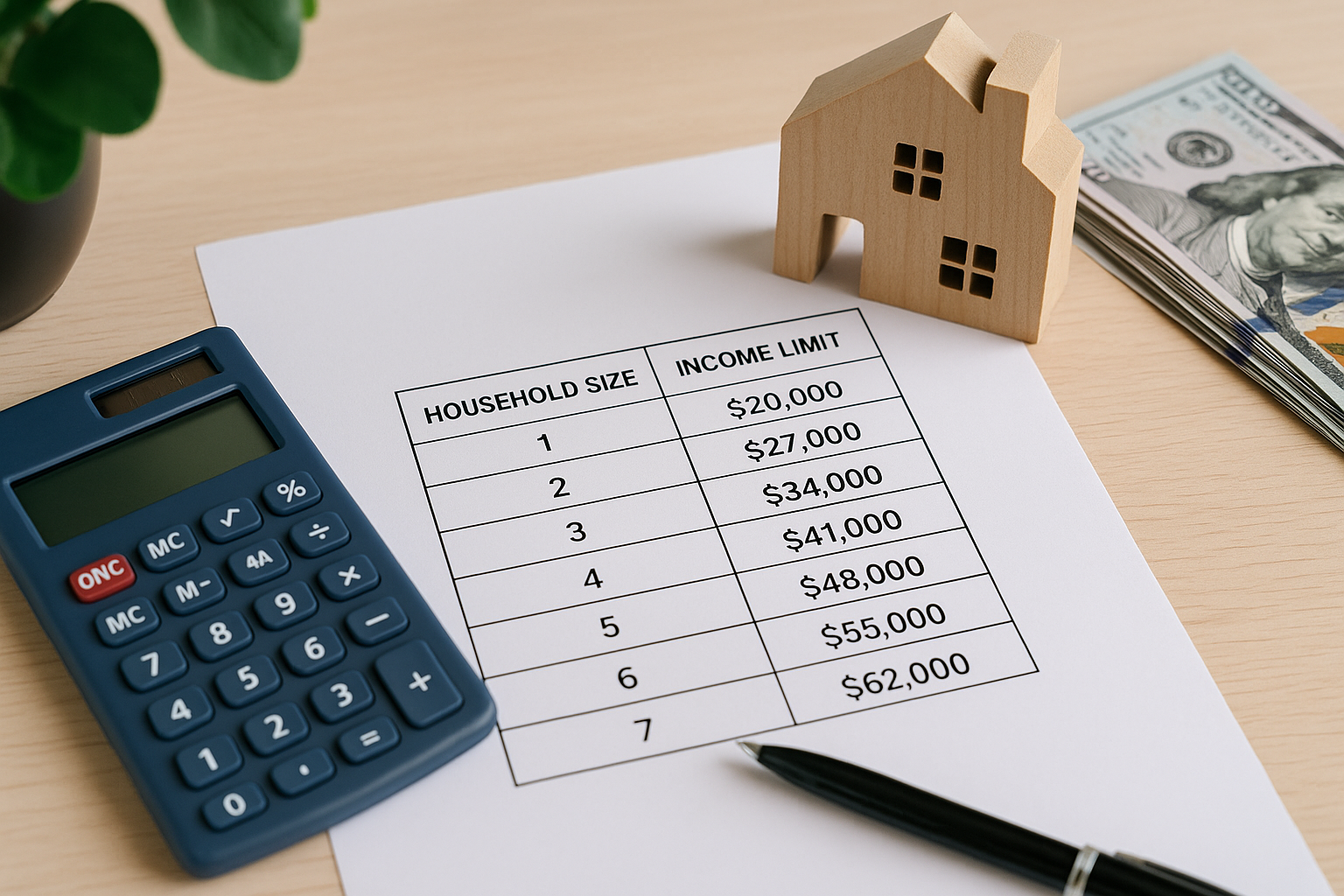
2024 Lifeline Income Limits by Household Size
You qualify by income if your household’s annual income is at or below 135% of the Federal Poverty Guidelines. The limit varies by household size and is higher in Alaska and Hawaii.
48 states and DC (135% of 2024 Federal Poverty Guidelines)
| Household size | Maximum annual income |
|---|---|
| 1 | $20,331 |
| 2 | $27,594 |
| 3 | $34,857 |
| 4 | $42,120 |
| 5 | $49,383 |
| 6 | $56,646 |
| 7 | $63,909 |
| 8 | $71,172 |
| Each additional person | Add $7,263 |
Alaska (135% of 2024 Federal Poverty Guidelines)
| Household size | Maximum annual income |
|---|---|
| 1 | $25,394 |
| 2 | $34,479 |
| 3 | $43,565 |
| 4 | $52,650 |
| 5 | $61,736 |
| 6 | $70,821 |
| 7 | $79,907 |
| 8 | $88,992 |
| Each additional person | Add $9,086 |
Hawaii (135% of 2024 Federal Poverty Guidelines)
| Household size | Maximum annual income |
|---|---|
| 1 | $23,359 |
| 2 | $31,725 |
| 3 | $40,082 |
| 4 | $48,438 |
| 5 | $56,795 |
| 6 | $65,151 |
| 7 | $73,508 |
| 8 | $81,864 |
| Each additional person | Add $8,357 |
Notes:
- Figures are 135% of the 2024 HHS poverty guidelines, rounded to the nearest dollar.
- Income limits generally apply to states and DC; Alaska and Hawaii use separate limits. Territories typically use the 48-state limits, but confirm with your provider or USAC.
- Limits update annually. Always check the current numbers before applying.
Program-Based Eligibility (Qualify Without Calculating Income)
You also qualify for Lifeline if you or someone in your household participates in any of these programs:
- Supplemental Nutrition Assistance Program (SNAP)
- Medicaid
- Supplemental Security Income (SSI)
- Federal Public Housing Assistance (FPHA, Section 8)
- Veterans Pension or Survivors Pension
- Tribal programs: Bureau of Indian Affairs General Assistance, Tribal TANF, Food Distribution Program on Indian Reservations (FDPIR), or Head Start (income-based)
Participation must be current. You’ll need an official document showing your name (or your dependent’s name), the program name, the issuing agency, and an eligibility or benefit date.
What Counts as Household Income
Lifeline uses gross annual household income—income before taxes and most deductions—from everyone in the household. Count all money earned or received regularly by adults and dependents whose income contributes to shared expenses. Include these common sources:
- Wages and salaries (before taxes)
- Self-employment or gig income (net after business expenses)
- Social Security retirement or disability benefits
- Pensions, annuities, and IRA distributions
- Unemployment benefits
- Alimony and child support received
- Cash assistance and other taxable income
Do not include:
- Student financial aid such as Pell Grants and scholarships
- SNAP benefits, housing assistance, or other in-kind benefits
- Federal or state tax refunds
- Loans you must repay
- Noncash benefits and disaster relief
To document income, you can use last year’s federal, state, or Tribal tax return; three consecutive months of pay stubs from the past 12 months; Social Security benefit statements; unemployment statements; or similar official documents. If your income fluctuates, use the most reliable 12-month picture you can document. The National Verifier may request additional proof if numbers are unclear.
How to Apply and Get Verified
You can apply online through the National Verifier (linked from lifelinesupport.org) or apply through a participating phone or internet provider who will submit your information. The basic steps are:
- Gather documents: proof of identity, address, and either proof of program participation or proof of income. Acceptable ID includes a driver’s license, state or Tribal ID, passport, or other government-issued photo ID.
- Submit an application: online, by mail, or through a provider. Use your legal name as it appears on your ID, and ensure your address is complete and standardized (include apartment or unit number).
- Respond to any document requests: upload clear, readable copies with your name, program/agency name, and dates visible.
- Choose a provider and plan: once approved, pick a participating provider to apply your Lifeline discount.
If multiple households live at your address, you may be prompted to complete a Household Worksheet. If you live on qualifying Tribal lands, ask your provider about the enhanced benefit and potential one-time Link Up support for installation if available.
Special Rules and Extra Support on Tribal Lands
Households on federally recognized Tribal lands may receive an enhanced monthly Lifeline discount (up to $34.25) and, in some areas, a one-time Link Up discount for installation or activation fees. Qualifying Tribal programs for eligibility include Bureau of Indian Affairs General Assistance, Tribal TANF, FDPIR, and income-based Head Start, in addition to the standard federal programs.
“Tribal lands” include reservations, Tribal statistical areas, Alaska Native regions, and Hawaiian Home Lands as defined by the FCC. Your provider can confirm whether your address qualifies for enhanced benefits.
If You’re Close to the Limit
If your income is slightly above the threshold, check whether anyone in the household qualifies through a participating program like SNAP or Medicaid. If your income has recently declined, consider applying with three consecutive current pay stubs that reflect your new annualized income, or wait for the next year’s updated limits if they may bring you under the cap. If you were enrolled in the now-ended Affordable Connectivity Program, note that ACP has sunset; Lifeline remains active with its own lower income threshold.
Keep Your Benefit: Usage and Annual Recertification
Lifeline is not set-and-forget. To keep your discount:
- Use it: most providers require at least one call, text, or data session every 30 days. Extended non-use can lead to de-enrollment.
- Recertify annually: USAC will contact you each year to confirm you still qualify. Respond by the deadline to avoid loss of benefits.
- Report changes within 30 days: new address, change in eligibility, or if someone else in your household starts receiving Lifeline.
- Don’t transfer: the benefit is non-transferable and limited to one per household.
If you move, update your address with your provider and the National Verifier. If you switch providers, make sure the Lifeline discount is transferred properly to avoid gaps.
Common Mistakes That Delay Approval
- Name mismatch between your ID and your application. Use your legal name exactly as shown on your ID.
- Missing apartment or unit numbers on the address, causing address validation failures.
- Submitting benefit letters without dates or without your name on them.
- Uploading blurry or cropped documents where key details aren’t legible.
- Counting non-income items (like SNAP) as income or forgetting to include all household members’ income.
- Overlooking the household definition. Roommates who share expenses are one household; those who do not share can be separate households with a Household Worksheet.
Frequently Asked Questions
Does part-time or seasonal work count toward the income limit?
Yes. Lifeline looks at your total gross household income over a 12-month period. If your work is seasonal or hours fluctuate, you can qualify based on your current documented income, typically shown with three consecutive pay stubs from the past 12 months or other official statements. If your income changed significantly, use documents that reflect the new, lower income level.
Can two people at the same address both get Lifeline?
Only if they are separate households that do not share income and expenses. For example, unrelated roommates who keep their finances completely separate can each qualify, but they will need to complete a Household Worksheet. If finances are shared, only one Lifeline discount is allowed for the combined household.
What documents are accepted to prove program participation?
Provide an official document with your name (or your dependent’s name), the program name (e.g., SNAP, Medicaid), the issuing agency, and a recent date or benefit period. Acceptable examples include an approval letter, benefits verification letter, or statement of benefits. Screenshots from an online account can work if they clearly show the required details.
How do I know whether to use the Alaska or Hawaii income limits?
Use Alaska limits if your residential address is in Alaska and Hawaii limits if your address is in Hawaii. All other states and DC use the 48-state table. U.S. territories generally follow the 48-state limits, but verify with your provider or USAC if you live in a territory.
Is child support considered income for Lifeline?
Yes, child support received is counted as household income. However, SNAP benefits, housing vouchers, student financial aid, and tax refunds are not counted as income for Lifeline eligibility purposes.
What happens if I stop qualifying after I’m enrolled?
You must report changes that affect eligibility within 30 days. Your provider or USAC may de-enroll you if you no longer qualify. You can reapply later if your circumstances change and you meet the income or program criteria again.
Is the Affordable Connectivity Program (ACP) the same as Lifeline?
No. ACP was a separate program with a higher income threshold that ended in 2024 due to lack of funding. Lifeline continues with its own rules and a 135% poverty guideline income limit. If you previously received ACP, you must qualify for Lifeline on its own terms to keep a monthly discount.